Wake Forest Football's Return to Prominence
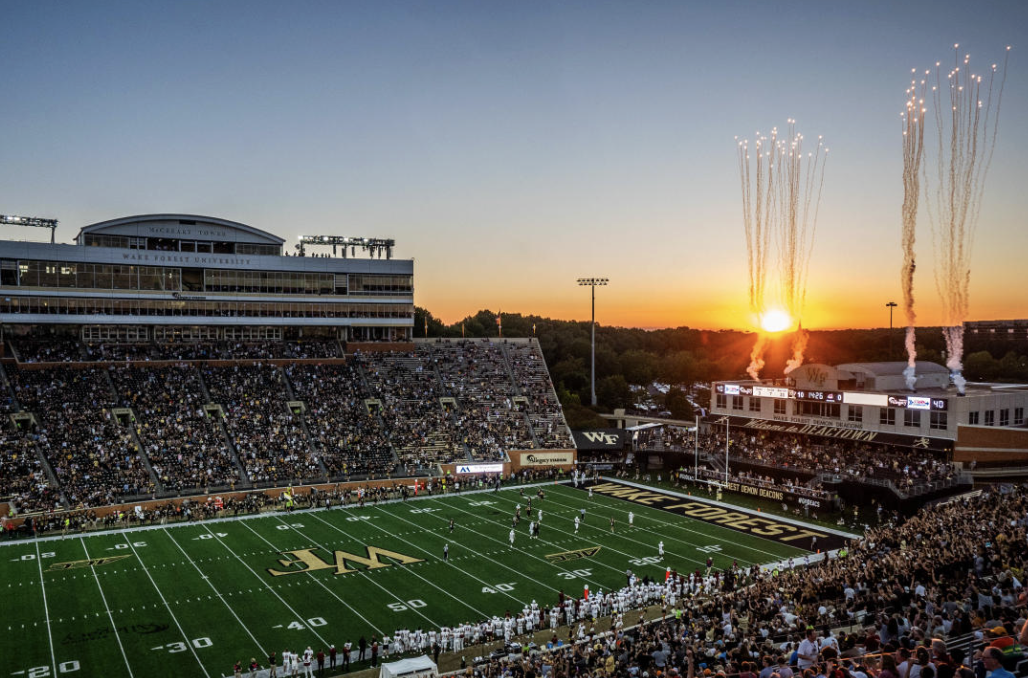
In the modern era of college football, every year some teams reload, while others are forced to rebuild. But in 2025, Wake Forest elected to do something different. They hit the complete reset button. Hard.
Just one season removed from a lackluster 4-8 campaign, the Demon Deacons have been completely retooled. But to understand how they have righted the ship in 2025, we must first dive into the struggles of 2024.
For years, Wake Forest football was defined by two things: quarterback Sam Hartman and their infamous Slow Mesh offense. It was a unique system masterminded by then Deacons head coach Dave Clawson. While most run-pass options (RPOs) last a second, Wake Forest’s RPO could stretch the decision point to nearly three. This elongated design was designed to freeze linebackers and defensive ends, forcing them to take a guess, run or pass.. With a quarterback like Sam Hartman at the helm, they almost always guessed wrong.
The system peaked in 2021, in a historic season for the Deacs, when they were able to roll to an 11-win season, appearing in the ACC Championship game, and finishing 4th in the nation in scoring. Hartman threw for over 4,200 yards and accounted for 50 total touchdowns that season, leading an elite Wake Forest offense.
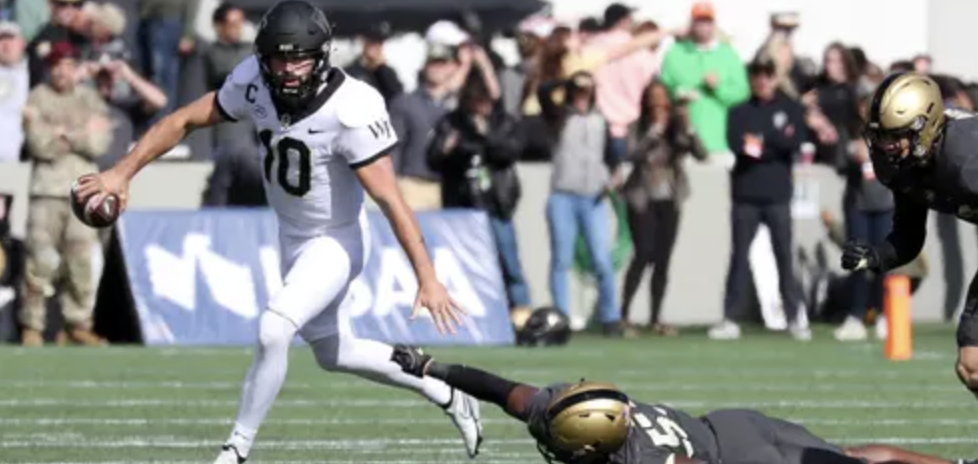
But by 2024, the magic was gone. The once-innovative system had become predictable. The offense sputtered, limping to a pedestrian 25.7 points per game, ranking 87th nationally. The foundation of the slow mesh—the run game—crumbled, averaging just 3.5 yards per carry. Without a credible run threat, the offense became inefficient, converting on just 39% of their third downs. The system built on deception, could no longer deceive. .
As far as the offense fell, the defense was in a state of total collapse. The 2024 unit wasn't just bad; it was one of the worst in the country. They surrendered a staggering 32.5 points and 435 yards per game, ranking 114th and 107th in the nation, respectively. Opponents moved the ball with ease, averaging a massive 6.0 yards per play.
To understand this failure, you only have to look tot the trenches. The core problem was a fundamental failure at the line of scrimmage. Opponents gashed the Deacs for 4.6 yards per rush, consistently dominating the point of attack. This created a disastrous ripple effect, as linebackers and safeties were forced to creep toward the line to help stop the run, leaving a vulnerable secondary—which allowed an opponent completion percentage of over 70%—exposed to deep passing threats (particularly play-action passes).
One of the most telling statistics revolves around the team’s leading tackler, defensive back Nick Andersen, with 119 tackles. When a safety is forced to make that many tackles, it’s a glaring indictment of the front seven, signaling that ball carriers were consistently getting to the second and third levels of the defense. The inability of the front seven to generate negative plays created a vicious cycle. The defense constantly faced third-and-short, and opponents converted at a higher rate than in past seasons, they simply could not get off the field. Even with an effective pass rusher like Jasheen Davis, who tallied 5.5 sacks and 11.5 tackles for loss, it wasn't nearly enough to mask the structural flaws of a unit without a true identity.
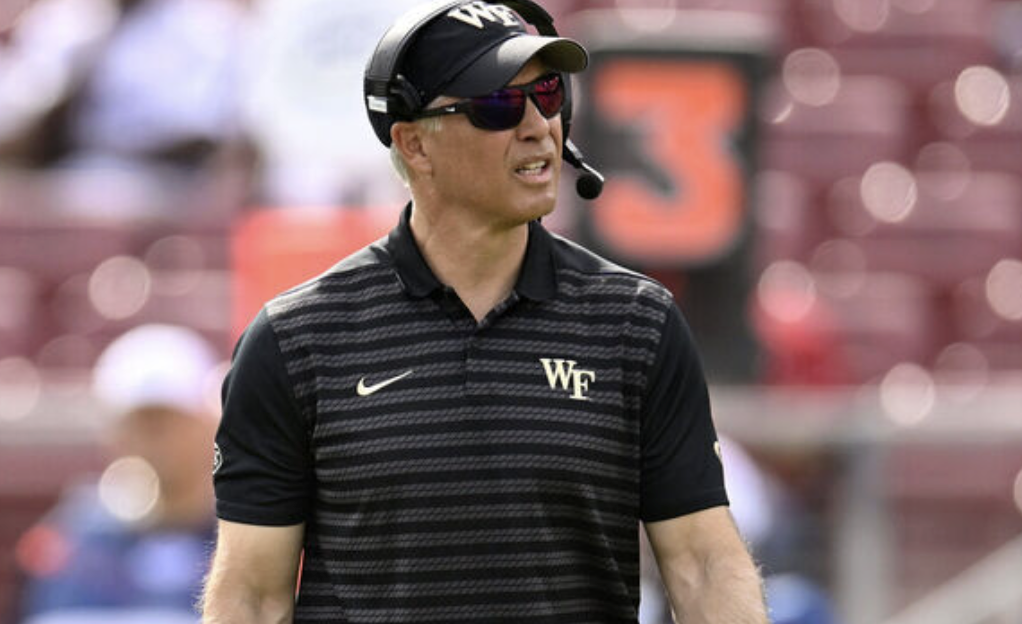
The end of the 2024 season brought on the end of an era, and the departure of Dave Clawson. Wake Forest hired defensive-minded coach Jake Dickert (formerly of Washington State), who immediately brought in a new brain trust. To run the offense, he tabbed Rob Ezell from South Alabama, whose 2024 offense was an explosive unit that averaged over 34 points per game.
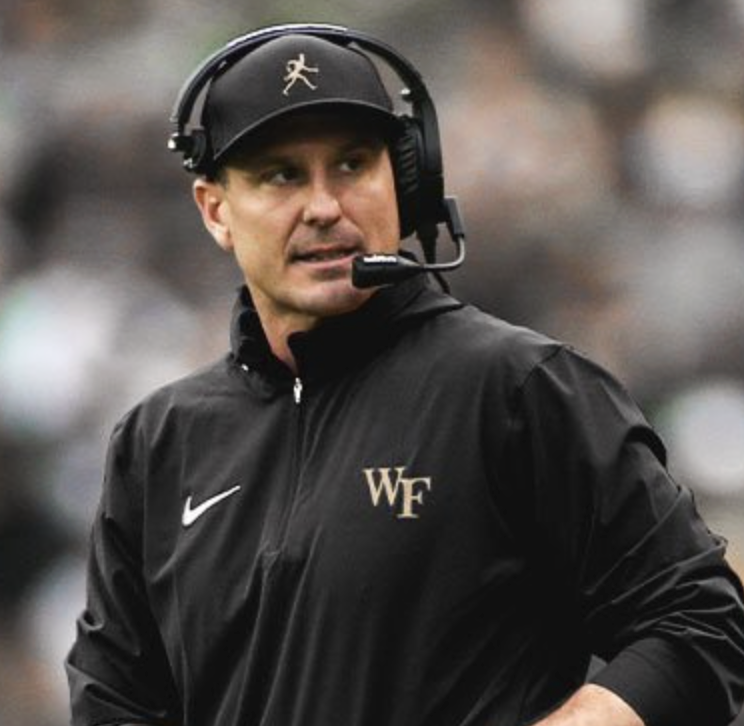
Ezell moved away from the Slow Mesh and installed an up-tempo spread offense. The philosophy is the polar opposite of the old regime: play fast, use tempo, and spread the field to create space for athletes to leverage one-on-one matchups. To run this new system, they needed a new kind of quarterback.
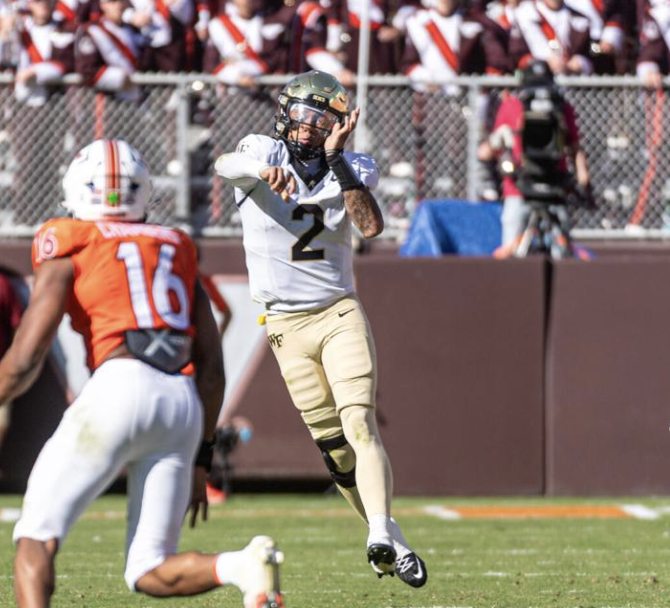
Enter Robby Ashford. A transfer from Auburn and South Carolina, Ashford is the dynamic, dual-threat weapon Ezell’s system is built for. Through his first 5 games, he’s thrown for over 1,100 yards while adding 233 yards and 4 touchdowns on the ground. His athleticism allows him to extend broken plays and create yardage out of nothing. However, that dynamic ability has come with some volatility, as his touchdown-to-interception ratio sits at a concerning 2-to-4. His inconsistency as a pure passer was on full display in the loss to NC State, where he threw two costly interceptions, including a pick-six that swung the game's momentum.
While Ashford is a key piece of the Wake Forest offense, its main engine lies on the back of running back Demond Claiborne. The most dynamic player on the Deacs offense, Claiborne is coming off a brilliant 1,000-yard, 13-touchdown season in 2024. In the very first game of the 2025 season, we got a preview of how the offense could perform without their star tailback. On the opening drive against Kennesaw State, Claiborne went down with an upper body injury. In his absence, the new offense struggled. The unit scored just one touchdown, barely escaping with a 10-to-9 victory. The backup running backs proved ineffective, combining for just 38 yards.
Upon his return, he’s proven to be a force of nature, averaging a 7.8 yards per carry and scoring eight touchdowns. He exploded for 193 yards and 3 scores against Western Carolina, showing flashes of a potential NFL back. Claiborne’s dominance forces defenses to stack the box, which in turn creates the space that allows Robby Ashford’s athleticism to become a true weapon. Claiborne’s presence is critical for the Wake Forest offense, as he is the key that unlocks Robby Ashford, and their downfield passing game.
The Foundation: A Defensive Fortification
While the offense has seemingly been fixed, the most profound transformation has occurred on the defensive side of the ball. This is Head Coach Jake Dickert’s signature. He brought in veteran coordinator Scottie Hazelton (previously of Michigan State), who installed an aggressive 4-2-5 defensive scheme designed to be flexible and relentlessly attack the football.

The results have been breathtaking. key number is the staggering 12.5-point drop in points allowed per game, down from 32.5 in 2024 to 20.0 this season. This change starts with eliminating the home run play. In 2024, opponents averaged 6.0 yards per play; this year, that number has been slashed to just 4.2. This defense now keeps everything in front of them, forcing offenses to grind out long drives. Something most college offenses struggle to do.
This newfound discipline has been built from the ground up. After getting gashed for 4.6 yards per rush last season, the 2025 front seven is allowing just 3.6 yards per carry. By controlling the line of scrimmage, they are forcing opposing offenses into predictable passing downs. That's where their next layer of improvement kicks in. The pass defense has been completely revitalized. Opponent completion percentage has plummeted from a staggering 70.3% in 2024 to a 55.7% this season. Better scheme, better execution, and more aggression have turned a former weakness into a genuine strength.
The transformation of Wake Forest football is not a fluke. It is the direct result of a deliberate rebuild, executed with precision in a single offseason. The fortification of the defense has provided the high floor, a bedrock of competitiveness that keeps them in most every game. The offense, while vastly more explosive, remains a thrilling work in progress—a unit with a high ceiling and projectable future growth, but one whose success hinges on the health of its superstar running back and the continued growth of its quarterback room.
The 2025 season may not end with a championship, but the true victory is already clear. Jake Dickert and his staff have laid a new foundation. They have established a clear, competitive identity for Wake Forest football, positioning the program not just for a fleeting turnaround, but for sustainable success. For the first time in a long time, the future in Winston-Salem is bright.